


Program Presentation
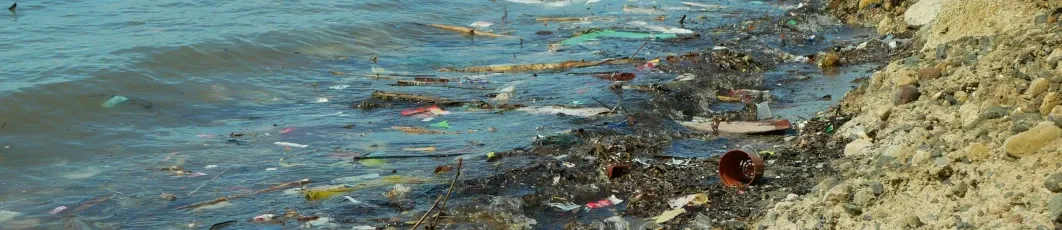
Currently, there are numerous industries that produce waste with high concentrations of heavy metals that can affect the aquatic environment. In invertebrates and other organisms, the accumulation of heavy metals in marine sediments causes them to pass through the food chain, starting the bioaccumulation of metals such as lead, cadmium, mercury, among others.
From a practical approach, the Marine Pollution Program presents a comprehensive analysis of the main problems of pollution that are affecting marine spaces. In reference to to physical contamination issues, existing theories and models of diffusion and the dilution of discharges into rivers and seas are addressed. In the discussion of chemical pollution, an overview of all chemical contaminants is carried out: hydrocarbons, pesticides, heavy metals, organic matter, etc. Finally, in terms of biological contamination, assessments and analysis of the major pathogens that can contaminate the environment are also studied.
Who is the programme for?
The Marine Pollution program is targeted specifically to satisfy two different types of groups:
- People without a college degree who may want a quality education in this field for personal gain or experience.
- University graduates who, in addition to their base education, want a practical specialization in the management of marine pollutants to broaden their career opportunities
Diploma
Successful completion of the Program will enable you to be awarded the degree in Experto Universitario en CONTAMINACIÓN MARINA.
After successfully completing the Program, the student will receive the degree as awarded by the University where they have enrolled.
Program Structure
The credit structure of the Marine Pollution program is gathered in the following table. This being a distance learning program, not subject to classes, there is no definitive starting date, which is why the student can finish the enrollment process at any moment, as long as there are available spaces:
| CREDITSa | |
|---|---|
| Subjects | 10 |
| TOTAL | 10 |
a. The equivalence in credits may vary according to the university granting the degree.
Duration
The program in Marine Pollution has 10 credits.
The duration of the program in Marine Pollution varies between 6 and 9 months, depending on the student's dedication. In this period of time, the student must have successfully passed all the evaluated activities and approved the Final Project, if any.
Objectives
General Objective:
- To evaluate the principal human impacts that the marine environment receives as the result of a growing social and industrial pressure on marine coasts.
Specific Objectives:
- To describe a marine ecosystem and the environmental impact that its organisms suffer.
- To analyze the processes that rule over the dynamics of marine pollutants and to identify the effect they have on coastal and marine ecosystems.
- To perform a first approach to the possible toxic effects of the incipient pollutants in the marine environment.
- To develop the environmental management of a coastal zone identifying and evaluating the impacts on the sea caused by different industrial activities.
Career Opportunities
Some of the career opportunities of the Marine Pollution program are the following:
- Teaching.
- Working in a hatchery and at fishing spots.
- Aquaculture
- Working in city hall as a technician/advisor in marine resources
Study Plan
The Marine Pollution program is composed of four subjects, including practical cases of toxicity by pesticides and industrial waste.
The subjects allow the student to learn and comprehend, first, the theoretical, conceptual and historical fundaments implied in marine contamination and, second, its organizational, social and technological implementation.
The objective is to ensure that the student acquires a global vision of the management of the marine pollutants through the related multidisciplinary topics.
The corresponding subjects and credits are shown in the following table:
| Marine Pollution | ||
|---|---|---|
| # | SUBJECTS | CREDITS |
| TOTAL | 10 | |
| 1 | Potentially Contaminated Marine Ecosystems | 2,5 |
| 2 | Environmental factors that affect pollutants | 2,5 |
| 3 | Pollutants | 2,5 |
| 4 | Toxicology | 2,5 |
| 5 | Practical Cases | - |
These subjects, are independent from each other, yet are structured in a pedagogical sequence from lesser to greater complexity. Each class is divided in thematic units or chapters, the contents of which include printed material that must be studied in order to successfully answer the evaluation tests.
Management
- Dr. Eduardo García Villena. Director of the Environmental Area in the International Ibero-american University (UNINI)
FUNIBER Training Scholarships
The Ibero-american University Foundation (FUNIBER) periodically delivers an economic baseline with extraordinary character for scholarships in FUNIBER Training
To apply for it, you only need to send your application for a scholarship on the website’s main page with the required data, and the evaluation committee will examine the suitability of your candidature to be granted economic aid, in the form of a scholarship in FUNIBER Training.