


Program Presentation
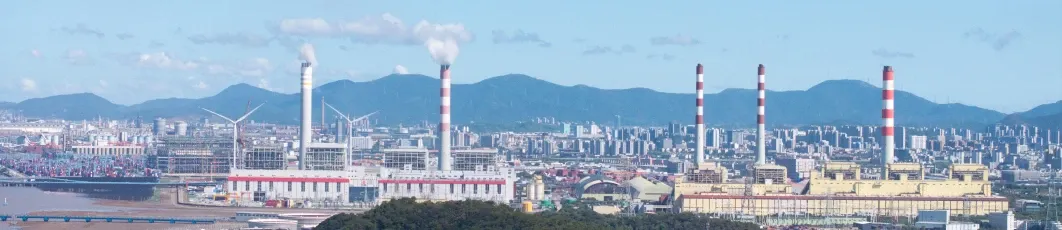
Air pollution is an unwanted by-product generated by factories through industrial processes. Equipment, facilities and management have been devoted to the prevention, or at least control of pollution.
The atmosphere, the gaseous layer that surrounds the earth that given its magnitude, might appear to suffer less than that which occurs in water or soil.
From a practical perspective, the Environmental Engineering: Gaseous Effluents Treatment program examines this issue and proposes strategies for control and reduction based on the source of pollution, outside of the treatment and correction that in most cases, is the result of transfer of pollutants from one medium to another.
Who is the programme for?
The Environmental Engineering: Treatment of Gaseous Effluents program is designed specifically for two different types of groups:
- People without degrees who may want a quality education in this field for personal gain or experience.
- University graduates who, in addition to their current education, would like a practical specialization in gaseous effluents to broaden their career opportunities.
Diploma
Successful completion of the Program will enable you to be awarded the degree in Experto Universitario en INGENIERÍA AMBIENTAL: TRATAMIENTO DE EFLUENTES GASEOSOS.
After successfully completing the Program, the student will receive the degree as awarded by the University where they have enrolled.
Program Structure
The credit structure of the Environmental Engineering: Treatment of Gaseous Effluents program is shown in the following table. This being a distance learning program, not being subject to classes, a clear starting date is not established, which is why the student can finish the enrollment process at any time, as long as there are spots available in the class:
| CREDITSa | |
|---|---|
| Subjects | 10 |
| TOTAL | 10 |
a. The equivalence in credits may vary according to the university granting the degree.
Duration
The program in Environmental Engineering: Treatment of Gaseous Effluents has 10 credits.
The duration of the program in Environmental Engineering: Treatment of Gaseous Effluents varies between 6 and 9 months, depending on the student's dedication. In this period of time, the student must have successfully passed all the evaluated activities and approved the Final Project, if any.
Objectives
General Objective:
- To apply techniques towards the treatment of effluent gases in the industry, through proposals for modifying behavior as well as establishing guidelines to minimize waste as the result of industrial process.
Specific Objectives:
- To describe the atmospheric pollutants derived from the use of fossil fuels.
- To learn about the laws of dispersion of pollutants in the atmosphere.
- To adopt preventive control measures and end of the line measures in industry.
- To perform sample analysis, in accordance with the specific legislation.
- To learn techniques for monitoring gases and airborne particles.
- To identify legislation in atmospheric matters applicable to industry.
Career Opportunities
Algunas de las salidas profesionales del programa de Ingeniería Ambiental: Tratamiento de Efluentes Gaseosos, son las siguientes:
- Ocupación en ayuntamiento, como técnico/asesor en eficiencia energética.
- Ocupación en redes de vigilancia atmosférica.
- Mantenimiento del instrumental y aparatos dedicados al tratamiento de gases.
- Trabajo en laboratorio de análisis de muestras.
- Docencia.
Study Plan
The Environmental Engineering: Treatment of Gaseous Effluents program is composed of one subject formed by four chapters, including practical case studies in the treatment of effluent gases.
The course will allow students to learn and understand, first, the theoretical, conceptual and historical principles involved in the management of gaseous effluents and, second, their organizational, social and technological implementation.
The objective is to ensure that students acquire a global vision of the management of this type of effluent, through related multidisciplinary topics.
The chapters that comprise the course are shown in the following table:
| Environmental Engineering: Treatment of Gaseous Effluents | |
|---|---|
| # | CHAPTERS |
| 1 | Nature of atmospheric pollutants |
| 2 | Dispersion of pollutants in the atmosphere |
| 3 | Control of pollutants in the atmosphere |
| 4 | Sampling of atmospheric pollutants |
| 5 | Case studies |
Management
- Dr. Eduardo García Villena. Director of the Environmental Area in the International Ibero-american University (UNINI)
FUNIBER Training Scholarships
The Ibero-american University Foundation (FUNIBER) periodically delivers an economic baseline with extraordinary character for scholarships in FUNIBER Training.
To apply for it, you only need to send your application for a scholarship on the website’s main page with the required data, and the evaluation committee will examine the suitability of your candidature to be granted economic aid, in the form of a scholarship in FUNIBER Training.